
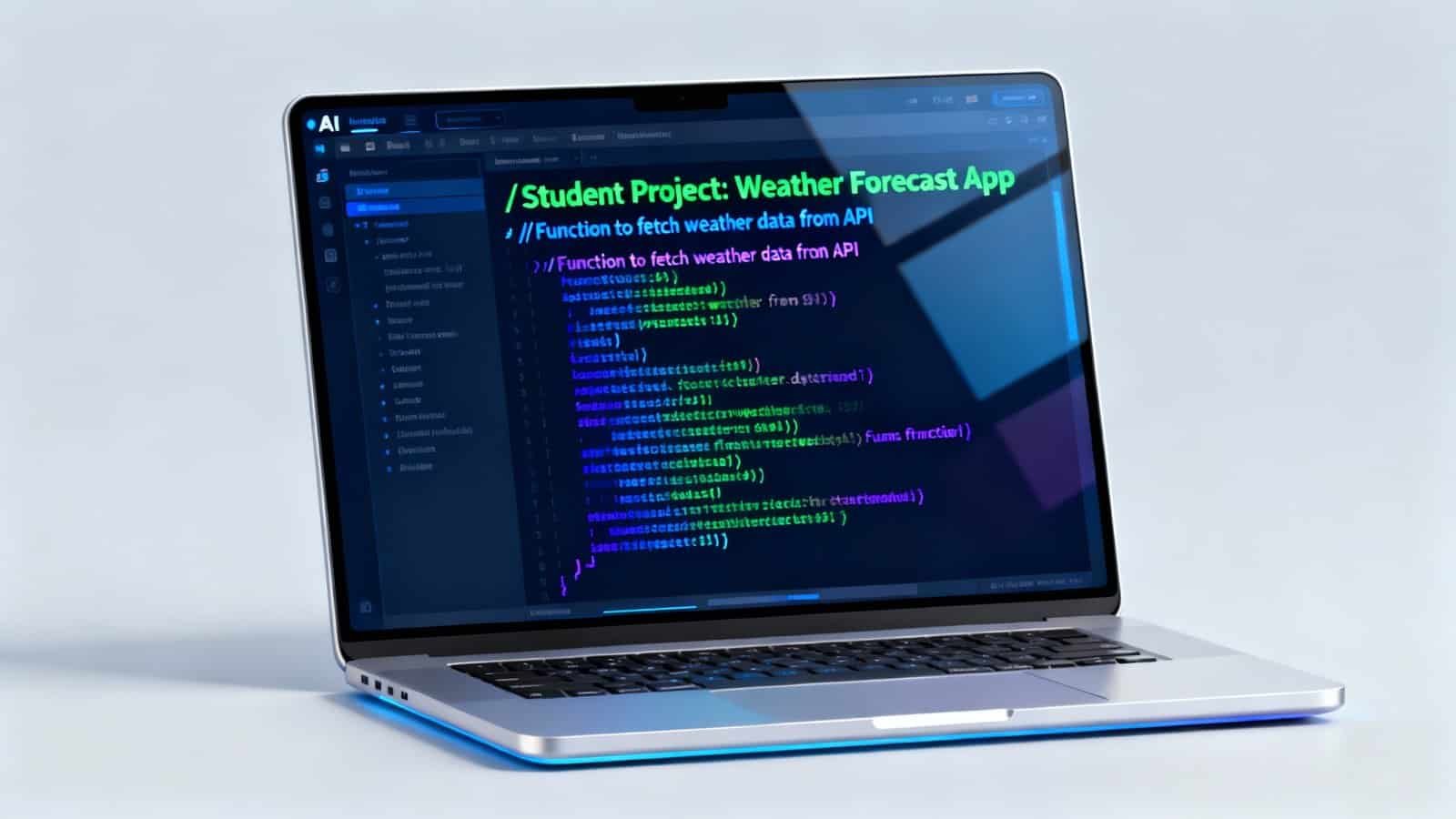
AI code comment generators use natural language processing and abstract syntax tree parsing to automatically create educational documentation for your programming assignments. These tools transform code analysis into pedagogical bridges, helping you understand algorithmic thinking while meeting academic documentation standards. You’ll benefit from consistent commenting patterns, reduced time investment, and enhanced code comprehension during debugging sessions. However, you must critically evaluate AI suggestions and maintain manual commenting skills to avoid dependency risks. Proper integration with validation workflows guarantees your projects achieve both technical excellence and learning objectives.
Key Takeaways
- AI comment generators use natural language processing and code analysis to automatically create documentation that explains programming logic and implementation details.
- These tools transform coding into active learning by forcing deeper engagement with algorithmic thinking while reducing time spent on manual documentation.
- Proper integration requires three-tier validation: automated syntax checking, semantic verification, and educational alignment to ensure comment accuracy and pedagogical value.
- Students benefit from consistent documentation standards, improved code comprehension, and professional-quality comments that align with academic requirements and grading rubrics.
- Critical risks include over-dependency leading to skill stagnation and accepting inaccurate explanations without verification, requiring mandatory review workflows.
Understanding the Role of Code Documentation in Student Learning

How effectively can students grasp complex programming concepts without proper documentation to guide their understanding?
Code documentation serves as a critical pedagogical bridge between conceptual knowledge and practical implementation.
When you document your code thoroughly, you’re not merely adding comments—you’re engaging in metacognitive development by articulating your thought processes and decision-making rationale.
Documentation transforms code comments into powerful metacognitive tools that reveal and strengthen your programming thought processes.
Proper documentation transforms passive coding into active learning.
You’ll find that explaining your logic forces deeper engagement with algorithmic thinking and design patterns.
This self-explanatory practice strengthens your ability to debug, maintain, and extend your solutions effectively.
Documentation also provides motivation enhancement through improved code comprehension and reduced cognitive load during debugging sessions.
When you revisit projects weeks later, well-documented code becomes self-teaching material.
Moreover, clear documentation facilitates peer review and collaborative learning, enabling classmates to understand and build upon your work while developing their own analytical skills.


How AI Code Comment Generators Work Behind the Scenes
When you interact with an AI code comment generator, you’re engaging with sophisticated natural language processing models that have been trained on vast repositories of annotated code to understand programming semantics and documentation patterns.
The system employs code analysis algorithms to parse your source code’s structure, identify variables, functions, and control flow, while simultaneously mapping these elements to appropriate explanatory language.
You’ll find that these tools combine syntactic parsing with semantic understanding to generate contextually relevant comments that align with established documentation standards.
Natural Language Processing
Although AI code comment generators appear to perform magic when they automatically generate descriptive comments for your code, they rely on sophisticated natural language processing techniques that transform raw source code into human-readable explanations.
These systems utilize tokenization to break your code into meaningful units, then apply semantic analysis to understand programming constructs and data flow patterns. The NLP pipeline employs techniques similar to machine translation, converting code syntax into natural language descriptions.
Advanced models incorporate sentiment analysis principles to determine appropriate tone and formality levels for documentation. Through transformer architectures and attention mechanisms, these generators contextualize variable names, function purposes, and algorithmic logic, producing coherent comments that accurately reflect your code’s functionality and intent.
Code Analysis Algorithms
Once your code enters an AI comment generator, sophisticated analysis algorithms dissect its structure through multiple computational layers that examine syntax trees, control flow graphs, and semantic relationships.
These systems employ pattern matching techniques to identify common programming constructs and idioms within your codebase.
The analysis process involves several key components:
- Abstract Syntax Tree (AST) parsing – Converts source code into hierarchical tree structures representing logical relationships
- Graph traversal algorithms – Navigate control flow paths to understand execution sequences and conditional branches
- Semantic analysis engines – Extract meaning from variable names, function signatures, and data structures
- Pattern recognition modules – Match code segments against known templates and programming paradigms
Through these interconnected processes, the system builds a thorough understanding of your code’s functionality, enabling generation of contextually appropriate comments.

Key Features to Look for in Student-Focused Comment Tools
When evaluating AI comment generators for educational environments, you’ll need tools that understand programming concepts within their pedagogical context rather than simply describing code functionality.
Educational context awareness enables the generator to provide comments that align with course objectives, assignment requirements, and appropriate complexity levels for your current skill development stage.
Effective student-focused tools must also incorporate learning progress tracking mechanisms that adapt commentary depth and technical vocabulary to match your evolving comprehension and coding proficiency.
Educational Context Awareness
Since educational programming environments differ fundamentally from professional development contexts, you’ll need AI comment generators that recognize and adapt to academic learning objectives.
These tools must understand classroom dynamics and maintain student privacy while delivering pedagogically appropriate feedback.
Effective educational comment generators should incorporate:
- Assignment-specific recognition that identifies common learning patterns and scaffolds appropriate explanations for current skill levels
- Academic vocabulary adaptation that matches comments to course terminology and avoids overwhelming beginners with industry jargon
- Progress tracking integration that connects commenting patterns to individual learning trajectories without compromising student privacy
- Instructor customization options that allow educators to define commenting standards aligned with specific curriculum goals and assessment rubrics
This contextual awareness guarantees comments serve educational purposes rather than merely describing code functionality.
Learning Progress Tracking
Building upon educational context awareness, you’ll need comment generators that actively monitor and document student coding development through sophisticated progress tracking mechanisms. These systems create holistic learner dashboards that visualize coding competency evolution across multiple dimensions. Milestone visualization becomes critical for both students and instructors to identify knowledge gaps and celebrate achievements.
| Tracking Dimension | Data Points | Assessment Method |
|---|---|---|
| Code Quality | Complexity metrics, documentation coverage | Automated analysis |
| Concept Mastery | Algorithm implementation, design patterns | Pattern recognition |
| Progress Velocity | Completion rates, debugging efficiency | Temporal analysis |
| Collaboration Skills | Peer review participation, communication clarity | Interaction monitoring |
Advanced tracking systems integrate semantic analysis with temporal learning models, enabling predictive insights about student trajectories. You’ll want tools that generate actionable feedback while maintaining granular records of individual learning progressions.
Benefits of Automated Documentation for Academic Projects
Although academic programming projects often require extensive documentation to meet rigorous evaluation standards,
you’ll find that automated code comment generators substantially streamline this traditionally time-intensive process.
These tools deliver measurable advantages for academic work:
- Enhanced Collaboration: Team members achieve faster onboarding when joining ongoing projects, as AI-generated comments provide immediate context about complex algorithmic implementations and data structures.
- Research Reproducibility: Thorough documentation guarantees your experimental code can be accurately replicated by peers, meeting academic publication standards and facilitating peer review processes.
- Grade Optimization: Professors evaluate documentation quality as a critical assessment criterion, and automated generators consistently produce professional-standard comments that demonstrate thorough understanding of implementation details.
- Time Allocation Efficiency: You’ll redirect hours previously spent on manual documentation toward core development tasks, algorithm refinement, and experimental validation.
This systematic approach transforms documentation from a burdensome requirement into an integrated development advantage that supports both learning objectives and academic excellence.
Best Practices for Integrating AI-Generated Comments
While AI-generated comments provide substantial documentation benefits, you must implement strategic integration practices to maximize their effectiveness in academic programming environments.
Strategic integration practices are essential for maximizing AI-generated documentation effectiveness in academic programming environments.
First, establish clear guidelines distinguishing AI-assisted documentation from original commentary to prevent plagiarism detection complications.
You’ll need to configure your deployment workflow to include mandatory review stages where you verify comment accuracy and pedagogical value.
Implement a three-tier validation system: automated syntax checking, semantic verification, and educational alignment assessment.
You should customize AI prompts to match your institution’s coding standards and academic requirements.
Create template structures that guide AI tools toward producing comments that demonstrate understanding rather than mere description.
Integrate version control practices that track AI-generated versus student-written documentation.
You must train yourself to critically evaluate AI suggestions, accepting only those that enhance code comprehensibility and learning outcomes.
This disciplined approach guarantees AI tools supplement rather than replace your analytical thinking processes.
Common Pitfalls and How to Avoid Over-Reliance on Automation
Even with robust integration practices, AI comment generators present significant risks that can undermine your programming education and professional development.
Trust erosion occurs when you begin accepting AI-generated explanations without verification, potentially internalizing incorrect interpretations of your code’s functionality.
This dependency can lead to skill stagnation, where your analytical capabilities deteriorate rather than strengthen through practice.
Critical pitfalls include:
- Passive learning habits – Accepting AI comments without questioning their accuracy or completeness
- Reduced problem-solving skills – Avoiding the cognitive effort required to understand complex code relationships
- False confidence – Believing you understand concepts simply because AI provides explanations
- Diminished code ownership – Losing intimate knowledge of your own implementation details
You’ll avoid over-reliance by treating AI comments as starting points rather than final answers.
Always verify generated explanations against your actual code logic, and regularly practice manual commenting to maintain your analytical skills and guarantee genuine comprehension.
Popular AI Comment Generator Tools for Educational Use

The landscape of AI-powered comment generation has produced several specialized tools designed specifically for educational environments. You’ll find GitHub Copilot leading the market through extensive marketing strategies targeting academic institutions with student discounts and classroom integrations. CodeWhisperer offers similar functionality with AWS’s educational partnerships.
For budget-conscious educators, open source alternatives provide robust solutions. Tabnine’s community edition delivers intelligent commenting without subscription fees. CodeT5 represents another open-source option you can customize for specific educational requirements. TabbyML offers self-hosted deployment, ensuring data privacy compliance with institutional policies.
Educational-specific platforms like Replit’s AI features integrate seamlessly into classroom workflows. CodePen’s AI assistant supports web development courses effectively.
You should evaluate tools based on language support, integration capabilities, and institutional compatibility rather than marketing claims alone. Consider pilot programs before full deployment to assess pedagogical value and student engagement outcomes.
Measuring the Impact on Code Quality and Learning Outcomes
Implementing AI comment generators in educational settings requires systematic evaluation of their effects on both code quality metrics and student learning progression.
You’ll need to establish baseline measurements before introducing these tools to accurately assess their impact on your students’ development.
Effective evaluation frameworks should track multiple dimensions of improvement:
- Code readability scores – Measure documentation quality, variable naming conventions, and structural clarity
- Grading consistency – Compare instructor evaluation variance before and after AI tool implementation
- Skill retention – Assess students’ ability to write quality comments independently after tool withdrawal
- Peer review effectiveness – Evaluate improvement in students’ code review and collaboration capabilities
You can leverage automated code analysis tools to quantify improvements in maintainability, complexity reduction, and adherence to coding standards.
Additionally, longitudinal studies tracking student performance across multiple projects will reveal whether AI-assisted commenting translates into sustained improvement in software engineering practices and critical thinking skills.
Frequently Asked Questions
Can AI Comment Generators Work With Programming Languages Not Taught in Class?
Yes, you can use AI comment generators with languages not covered in your coursework, though you’ll encounter challenges with niche syntax recognition and parsing accuracy.
Most generators offer tool extensibility through plugins or custom configurations that you can adapt for specialized languages.
However, you’ll need to verify comment quality more rigorously since the AI’s training data may lack sufficient examples from uncommon programming languages.
Do Professors Consider Ai-Generated Comments as Academic Dishonesty or Plagiarism?
Professors’ perspectives vary markedly regarding AI-generated comments and academic dishonesty classifications.
You’ll find that cheating definitions depend on explicit course policies about AI tool usage and authorship attribution requirements.
Some instructors consider undisclosed AI assistance plagiarism, while others permit it with proper citation.
You must check your syllabus and ask directly about AI comment generators, as institutional policies continue evolving rapidly across academic institutions.
How Much Do Student-Focused AI Code Comment Generator Tools Typically Cost?
You’ll find most student-focused AI code comment generators offer tiered subscriptions ranging from free basic plans to premium options costing $10-30 monthly.
These pricing tiers typically include usage limits, with free versions allowing 50-100 comments weekly and paid plans offering unlimited generation plus advanced features like multi-language support and integration with popular IDEs for enhanced learning experiences.
Will Using AI Comment Generators Hurt My Chances in Technical Interviews?
Using AI comment generators can hurt your interview chances if you can’t demonstrate genuine understanding of your code.
Interviewers assess skill demonstration through your ability to explain logic and design decisions authentically.
Authenticity concerns arise when you rely heavily on AI-generated comments without comprehending underlying concepts.
You’ll struggle answering follow-up questions about implementation details, revealing gaps in your actual programming knowledge and problem-solving capabilities.
Can These Tools Generate Comments for Group Projects With Multiple Coding Styles?
Yes, you’ll find these tools can accommodate multiple coding styles through style agnostic algorithms that analyze code structure rather than formatting preferences. You can configure consensus settings that establish team-wide commenting standards, ensuring consistency across contributors.
However, you must carefully review generated comments since stylistic variations in variable naming, function organization, and architectural patterns can sometimes confuse the AI’s contextual understanding of your collaborative codebase.
Conclusion
You’ll maximize learning outcomes when you strategically integrate AI comment generators as supplementary tools rather than replacements for manual documentation practices. You must establish clear guidelines for when and how you’ll utilize automated comments, ensuring they enhance rather than diminish your understanding of code structure and logic. By maintaining critical evaluation of generated comments and practicing manual documentation alongside AI assistance, you’ll develop robust programming skills while leveraging technological advantages effectively.
Table of Contents
- 1 Key Takeaways
- 2 Understanding the Role of Code Documentation in Student Learning
- 3 How AI Code Comment Generators Work Behind the Scenes
- 4 Key Features to Look for in Student-Focused Comment Tools
- 5 Benefits of Automated Documentation for Academic Projects
- 6 Best Practices for Integrating AI-Generated Comments
- 7 Common Pitfalls and How to Avoid Over-Reliance on Automation
- 8 Popular AI Comment Generator Tools for Educational Use
- 9 Measuring the Impact on Code Quality and Learning Outcomes
- 10 Frequently Asked Questions
- 10.1 Can AI Comment Generators Work With Programming Languages Not Taught in Class?
- 10.2 Do Professors Consider Ai-Generated Comments as Academic Dishonesty or Plagiarism?
- 10.3 How Much Do Student-Focused AI Code Comment Generator Tools Typically Cost?
- 10.4 Will Using AI Comment Generators Hurt My Chances in Technical Interviews?
- 10.5 Can These Tools Generate Comments for Group Projects With Multiple Coding Styles?
- 11 Conclusion









No Comments