
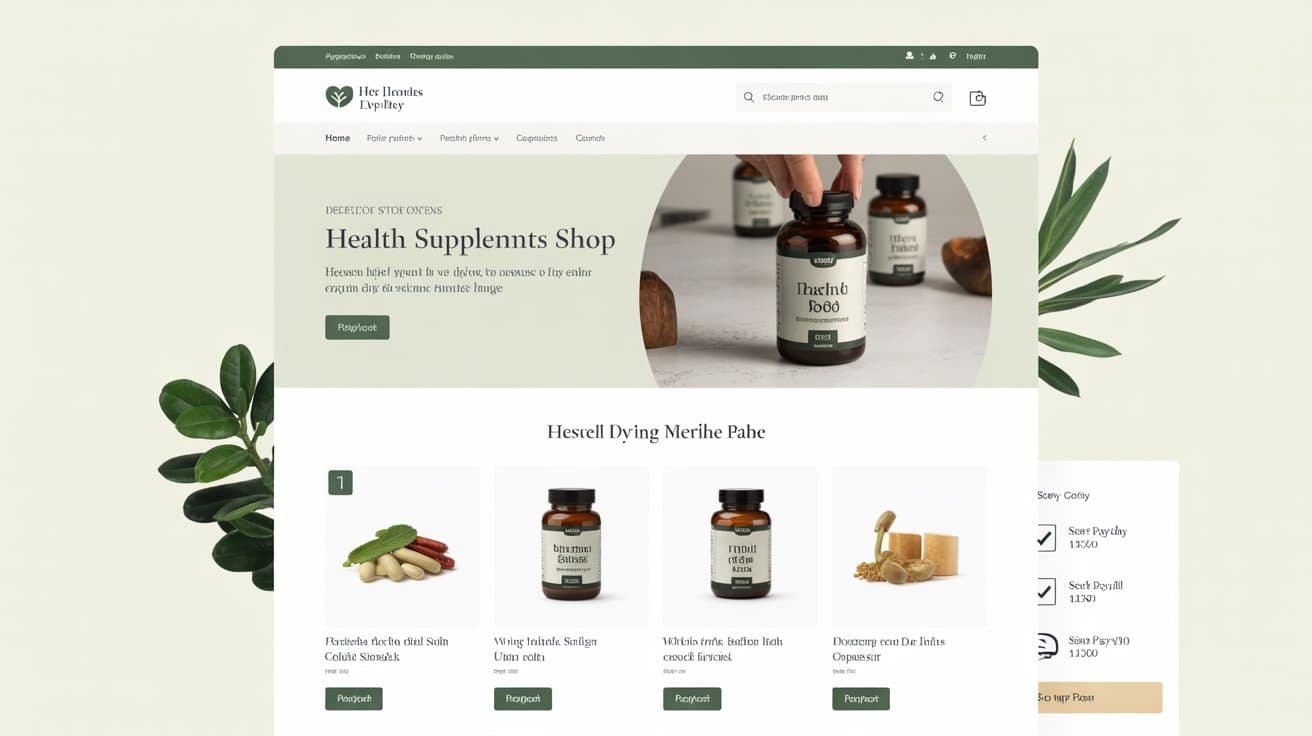
You’ll need FDA-compliant disclaimers stating products haven’t been evaluated by the FDA, third-party certificates of analysis (COAs) with ISO/IEC 17025 laboratory verification, complete Supplement Facts panels with allergen labeling per FALCPA requirements, PCI DSS-compliant payment processing with SSL encryption, mobile-responsive design maintaining label legibility, age verification systems for restricted categories, and documented customer support with adverse event reporting protocols. Implementing automated keyword detection for prohibited drug claims and maintaining substantiation documentation guarantees regulatory compliance. The thorough framework below covers critical operational safeguards.
Key Takeaways
- Implement FDA-compliant disclaimers stating products haven’t been evaluated and aren’t intended to diagnose, treat, cure, or prevent diseases.
- Display certificates of analysis (COAs) and third-party lab verification badges prominently with clickable links to full results.
- Establish PCI DSS compliance with encrypted payment processing, SSL certificates, and multi-factor authentication for secure transactions.
- Create automated keyword detection systems to flag prohibited drug claims like “cure” or “treat” for manual review.
- Implement age verification systems and health warnings, especially for stimulants, with interactive acknowledgment modals before purchase.
FDA Compliance and Legal Disclaimers
When operating a health supplements e-commerce platform, you must establish thorough FDA compliance protocols that address the Federal Food, Drug, and Cosmetic Act’s stringent requirements for dietary supplement marketing and labeling. Your website needs mandatory disclaimers stating products haven’t been evaluated by the FDA and aren’t intended to diagnose, treat, cure, or prevent diseases.
You’ll need robust promotional claim substantiation documentation for any structure-function claims. Maintain scientific evidence supporting health-related statements before publication. Implement clear adverse events reporting procedures enabling customers to report supplement-related complications directly to you and subsequently to FDA’s MedWatch system.
Essential legal disclaimers must appear prominently on product pages, including statements about individual results varying and consulting healthcare providers before use. Your terms of service should address liability limitations while maintaining transparency about supplement classifications under DSHEA regulations. Document all compliance measures systematically to demonstrate good faith regulatory adherence during potential FDA inspections.
Third-Party Testing and Certification Display
Because third-party testing validates your supplements’ purity, potency, and safety claims, you must prominently display certificates of analysis (COAs) and independent laboratory verification badges throughout your product pages. Third party disclosure requirements mandate transparent communication of testing methodologies and results to consumers.
Third-party testing verification requires prominent COA display and transparent laboratory results communication to validate supplement safety claims.
Implement these essential display elements:
- Certification badges from accredited laboratories (ISO/IEC 17025 certified) positioned above product descriptions with clickable links to full lab results
- Authenticity seals featuring batch-specific testing data, including heavy metals, microbiological contaminants, and active ingredient verification
- Real-time COA access through QR codes or batch number lookup systems enabling immediate verification of product specifications
Position lab results prominently on individual product pages, ensuring consumers can easily access testing documentation. Include testing dates, laboratory credentials, and specific analytical methods used. This transparency builds consumer confidence while demonstrating regulatory compliance with current Good Manufacturing Practices (cGMP) standards and FDA guidelines for dietary supplement quality assurance.
Product Information and Ingredient Transparency
Beyond displaying third-party verification, thorough product information disclosure forms the foundation of regulatory compliance and consumer trust in your supplement business. You must implement all-encompassing ingredient transparency protocols that exceed FDA labeling requirements.
Your product pages should display complete Supplement Facts panels with standardized serving sizes and dosage clarity for each active ingredient. Include botanical names alongside common names, specify extraction ratios, and indicate standardization percentages where applicable. You’re required to present all-encompassing allergen labeling that identifies all major allergens according to FALCPA guidelines.
Display detailed inactive ingredient lists, including capsule materials, flow agents, and preservatives. Your website must clearly communicate contraindications, drug interactions, and usage warnings. Include lot-specific information accessibility through batch tracking systems.


Ensure your ingredient sourcing transparency includes country of origin data and manufacturing facility certifications. You’ll strengthen consumer confidence by providing detailed product monographs that explain ingredient synergies and bioavailability factors supported by peer-reviewed research.
Secure Payment Processing and SSL Certificates
Since supplement consumers entrust you with sensitive financial data and personal health information, implementing robust payment security infrastructure becomes paramount for regulatory compliance and liability protection.
You’ll need PCI DSS compliance certification to process credit card transactions legally. This framework mandates encrypted data transmission, secure storage protocols, and regular vulnerability assessments. Your payment gateway must tokenize cardholder information, preventing unauthorized access to sensitive financial data.
SSL/TLS certificates establish encrypted connections between browsers and servers, creating secure tunnels for data transmission. Certificate pinning provides additional security layers by binding specific certificates to your domain, preventing man-in-the-middle attacks.
Essential security measures include:
- Multi-factor authentication for administrative access and customer accounts
- Real-time fraud detection algorithms monitoring suspicious transaction patterns
- Automated security scanning identifying vulnerabilities in payment processing systems
Regular penetration testing validates your security infrastructure’s effectiveness. Third-party security audits ensure ongoing compliance with evolving regulatory standards while safeguarding against emerging cyber threats targeting e-commerce platforms.
Mobile-Responsive Design and Site Speed
Your health supplement website’s mobile-responsive design directly impacts consumer accessibility and regulatory compliance, as FDA guidelines emphasize clear product information presentation across all device platforms.
You must optimize your mobile layout to guarantee supplement facts panels, dosage instructions, and health claims remain legible and properly formatted on smartphones and tablets.
Page loading speed becomes critical for maintaining user engagement and meeting accessibility standards, particularly when displaying high-resolution product images and detailed nutritional information required by regulatory frameworks.
Mobile Layout Optimization
When approximately 60% of health supplement purchases now occur through mobile devices, implementing robust mobile layout optimization becomes critical for regulatory compliance and conversion success. You’ll need to prioritize gesture navigation patterns that accommodate natural thumb reachability zones, positioning primary CTAs within the lower third of screen real estate.

Your mobile interface must maintain FDA-compliant disclosure visibility while streamlining product information hierarchy. Consider these essential optimization elements:
- Touch Target Sizing: Implement minimum 44px clickable areas for supplement selection buttons and dosage calculators
- Content Prioritization: Position critical product claims, ingredient lists, and regulatory disclaimers above the fold
- Form Optimization: Reduce checkout friction through auto-fill capabilities and simplified input fields for prescription verification
Strategic mobile layout optimization directly correlates with improved conversion rates and regulatory adherence across your supplement inventory.
Page Loading Speed
Although mobile optimization enhances user experience, page loading speed remains the foundational element that determines whether customers complete supplement purchases or abandon your site entirely. Clinical studies demonstrate that 53% of mobile users abandon sites exceeding three-second load times, directly impacting conversion rates for nutraceutical products.
| Speed Factor | Regulatory Impact |
|---|---|
| Image optimization | FDA compliance documentation loads faster |
| Caching strategies | Guarantees consistent label information delivery |
| Server response time | Maintains supplement fact panel accessibility |
| Code compression | Reduces latency for health claim displays |
You’ll need to implement browser caching strategies for static supplement images and compress product photography without compromising FDA-required label legibility. Optimize your supplement database queries and minify CSS/JavaScript files to achieve sub-two-second loading speeds across all device types.
Customer Reviews and Testimonials System
You must implement a robust customer reviews and testimonials system that complies with FDA regulations regarding substantiation of health claims and truthful advertising standards.
Your collection methods should assure authentic feedback while maintaining HIPAA-compliant privacy protections for customers sharing health-related experiences.
The verification process you establish must demonstrate due diligence in preventing misleading testimonials that could constitute unapproved drug claims under federal guidelines.
Authentic Testimonial Collection Methods
Since customer testimonials markedly influence purchasing decisions for health supplements, implementing a robust collection system becomes essential for regulatory compliance and consumer trust. You’ll need structured protocols that guarantee authenticity while adhering to FDA guidelines regarding health claims and substantiation requirements.
Effective collection methods include:
• In person interviews with verified purchasers, documenting their experiences through standardized questionnaires that capture specific health outcomes and product usage patterns

- Video testimonials recorded under controlled conditions, requiring signed consent forms and disclosure statements that comply with FTC endorsement guidelines
- Post-purchase email campaigns with embedded review forms that include verification checkpoints and legal disclaimers regarding individual results
- Video testimonials recorded under controlled conditions, requiring signed consent forms and disclosure statements that comply with FTC endorsement guidelines
Your collection framework must incorporate timestamp verification, purchase confirmation matching, and clear documentation trails. This systematic approach protects against fraudulent submissions while building credible testimonial databases that support marketing initiatives and regulatory scrutiny.
Moderation and Verification Process
While collecting authentic testimonials establishes your foundation, implementing rigorous moderation protocols guarantees compliance with FDA substantiation requirements and prevents misleading health claims from reaching consumers.
You’ll need structured user moderation workflows that flag disease claims, therapeutic promises, and unsubstantiated efficacy statements before publication.
Establish content provenance verification by requiring purchaser authentication through order numbers, email verification, and time-delayed posting periods.
Your moderation team must distinguish between permissible structure-function claims and prohibited drug claims according to DSHEA guidelines.
Implement automated keyword detection for terms like “cure,” “treat,” or “diagnose” that trigger manual review.
Document all moderation decisions for regulatory audits, maintaining detailed logs of rejected content and approval rationales to demonstrate due diligence in preventing deceptive marketing practices.
Display and Integration Strategy
After establishing compliant moderation protocols, strategic placement of customer reviews directly impacts conversion rates and regulatory adherence across your supplement website. Your display strategy must prioritize visual hierarchy while maintaining FDA compliance standards for testimonial presentation.
Implement API integration systems that automatically populate verified reviews across relevant product pages without compromising loading speeds. Position testimonials strategically within the customer journey—below product descriptions but above purchasing decisions. You’ll need responsive design elements that adapt review displays across mobile and desktop platforms.
- Product page integration: Embed reviews directly beneath ingredient lists and dosage information to support informed purchasing decisions
- Homepage testimonial carousel: Feature verified customer experiences with clear disclaimers about individual results varying
- Category-specific review aggregation: Display relevant testimonials for targeted supplement categories like vitamins, proteins, or herbal products
Professional Product Photography and Descriptions
When customers evaluate health supplements online, they rely primarily on visual cues and detailed product information to make informed purchasing decisions. Your product photography must demonstrate clinical precision through controlled studio setups that showcase supplement facts panels, ingredient transparency, and USP verification marks. Lifestyle shots should authentically represent appropriate usage contexts while maintaining FDA compliance standards.
| Photography Requirements | Content Standards |
|---|---|
| High-resolution images (300+ DPI) | Third-party testing certificates |
| Multiple angles including label details | Dosage instructions and contraindications |
| Consistent lighting and backgrounds | Allergen warnings and storage requirements |
You’ll need detailed descriptions that include bioavailability data, standardized extract percentages, and clinical study references. Assure all therapeutic claims comply with FDA guidelines for dietary supplements. Include batch testing information, expiration dates, and proper storage conditions. Your descriptions must balance scientific accuracy with consumer accessibility while avoiding prohibited disease claims that could trigger regulatory violations.
Clear Return and Refund Policies
Because health supplements affect individual biochemistry differently, establishing transparent return and refund policies becomes essential for regulatory compliance and consumer protection. Your supplement shop must clearly communicate terms that protect both consumer rights and business operations while adhering to FDA guidelines for nutraceutical returns.
Transparent return policies protect consumers and ensure regulatory compliance while managing the unique challenges of supplement biochemistry variations.
Document your restocking policy prominently on product pages and checkout processes. Specify any restocking fees for opened products, typically ranging from 15-25% to cover quality assurance testing and inventory management costs. Your exchange timeframe should comply with state consumer protection laws, generally offering 30-60 days for unopened items.
Essential policy components include:
- Opened product restrictions – Define conditions for returning opened supplements due to contamination risks
- Documentation requirements – Specify proof of purchase and return authorization procedures
- Processing timelines – Establish clear refund processing periods, typically 5-10 business days
These policies demonstrate regulatory compliance while managing operational costs effectively.
Contact Information and Customer Support Access
You must provide multiple contact channels including telephone, email, and live chat to meet FDA guidelines for direct communication with consumers regarding health products.
Your customer support system requires clearly defined response time standards, typically 24-48 hours for email inquiries and immediate availability during posted business hours for phone support.
These contact protocols assure regulatory compliance while enabling consumers to obtain essential product information and report adverse events as mandated by federal health supplement regulations.
Multiple Contact Channels
Setting up complete contact channels builds consumer confidence and guarantees regulatory compliance for health supplement retailers. You’ll need diversified communication pathways to address customer inquiries about product interactions, dosing protocols, and adverse event reporting requirements.
Your contact infrastructure should include traditional methods alongside digital platforms. Live chat functionality enables real-time consultation for urgent safety questions, while social messaging platforms facilitate accessible customer engagement. Each channel must connect to qualified personnel who understand supplement regulations and contraindications.
- Phone support with trained representatives who can discuss product specifications, ingredient profiles, and potential drug-nutrient interactions
- Email ticketing system for documented correspondence regarding complaints, adverse events, and regulatory inquiries
- Live chat integration with automated routing to appropriate departments based on inquiry type and urgency level
Response Time Standards
Rapid response protocols become critical when customers contact health supplement retailers about potential adverse reactions, drug interactions, or dosing concerns.
You must establish specific timeframes for different contact channels to make certain regulatory compliance and customer safety.
Implement live chat with immediate acknowledgment within 30 seconds for urgent health-related inquiries.
Set email response standards at 2-4 hours for medical questions and 24 hours for general inquiries.
Monitor api latency to maintain consistent platform performance across all communication channels.
Document response times for FDA compliance auditing purposes.
Train customer service representatives to escalate serious adverse event reports immediately to qualified healthcare professionals.
Automated acknowledgment systems should clearly state expected response timeframes and provide emergency contact alternatives for critical situations requiring immediate medical attention.
Age Verification and Health Warnings
Although FDA regulations don’t mandate age verification for dietary supplements, implementing robust age verification systems protects your business from liability and guarantees compliance with platform-specific requirements. Age gates serve as your first line of defense against underage purchases, particularly for supplements containing stimulants, nootropics, or performance enhancers.
Age verification systems protect your business from liability while ensuring platform compliance for stimulant and performance supplement sales.
Your verification system should integrate seamlessly with checkout processes while maintaining COPPA compliance for users under 13.
Implement thorough health warnings that meet regulatory standards:
- Pre-purchase disclaimers stating “This product hasn’t been evaluated by the FDA” and contraindications for pregnant/nursing women
- Interactive warning modals requiring user acknowledgment before adding high-stimulant or specialized supplements to cart
- Age-restricted product categories with enhanced verification requiring government-issued ID validation
Parental controls should prevent minors from accessing restricted supplement categories.
Configure your e-commerce platform to automatically trigger verification protocols based on product classifications, ensuring consistent regulatory adherence across your entire supplement inventory.
Search Engine Optimization for Supplement Keywords
When optimizing your supplement website for search engines, you must navigate strict FDA guidelines that prohibit disease claims while maximizing organic visibility through compliant keyword strategies.
Implement keyword clustering to group related supplement terms while maintaining regulatory compliance. Focus on structure/function claims rather than therapeutic benefits. Target terms like “supports immune health” instead of “cures infections.”
Deploy longtail optimization targeting specific product combinations and user intent. Examples include “magnesium glycinate for sleep support” or “third-party tested whey protein isolate.” These phrases attract qualified traffic while avoiding prohibited medical claims.
Optimize product descriptions using scientifically accurate terminology. Include ingredient names, bioavailability data, and manufacturing standards. Incorporate FDA-compliant language such as “intended for healthy adults” and “not evaluated by FDA.”
Structure content around nutritional science keywords, dosage guidelines, and quality certifications. This approach satisfies search algorithms while maintaining legal compliance throughout your supplement marketing strategy.
Inventory Management and Stock Level Indicators
Beyond content optimization, your supplement website requires sophisticated inventory tracking systems that maintain regulatory compliance while preventing stockouts of controlled substances and dietary ingredients. Real time inventory monitoring prevents overselling products with limited shelf life and guarantees accurate availability displays for customers. You’ll need automated batch tracking capabilities that trace each product from manufacturing through distribution, maintaining complete chain of custody documentation required by FDA regulations.
Essential inventory management features include:
- Automated reorder points configured for each SKU based on lead times and velocity patterns
- Safety stock calculations that account for seasonal demand fluctuations and supplier variability
- Expiration date tracking with automated alerts for products approaching shelf life limits
Your system must integrate with warehouse management software to provide customers with precise delivery estimates. Configure low-stock warnings at multiple thresholds to prevent customer disappointment while maintaining optimal working capital allocation across your supplement portfolio.
Frequently Asked Questions
How Often Should I Update My Website’s Privacy Policy and Terms of Service?
You should conduct legal reviews and establish an update frequency of annually at minimum for your privacy policy and terms of service.
However, you’ll need immediate updates when regulatory changes occur, new data collection practices begin, or business operations shift.
Given FDA regulations and supplement industry compliance requirements, quarterly assessments guarantee adherence to evolving legal standards and protect against liability exposure.
What Analytics Tools Should I Use to Track Customer Behavior and Conversions?
You’ll need Google Analytics for thorough conversion tracking and Hotjar Heatmaps to analyze user interactions.
Implement Facebook Pixels for advertising attribution and Mixpanel Funnels to identify drop-off points in your purchase process.
Consider Segment Tracking for unified data collection and Amplitude Events for behavioral analysis.
For compliance-sensitive operations, you might prefer Matomo Self-hosted over third-party solutions like Clicky Sessions, Crazy Egg, or FullStory Replay to maintain data sovereignty.
How Do I Handle International Shipping Regulations for Health Supplements?
You’ll need to research each destination country’s customs compliance requirements and establish proper documentation protocols.
Verify that your products meet international labeling standards, including ingredient declarations, health claims restrictions, and mandatory warnings.
Implement regulatory compliance systems for prohibited substances lists, import licensing requirements, and certificate of analysis documentation.
Partner with specialized freight forwarders experienced in pharmaceutical and nutraceutical shipments to guarantee adherence to country-specific regulations and avoid customs delays.
Should I Offer Subscription Services or Auto-Delivery Options for Regular Customers?
You should implement subscription services with recurring billing systems to enhance customer retention rates.
Clinical studies demonstrate that auto-delivery programs increase customer lifetime value by 300-400%.
You’ll need robust consent mechanisms for recurring billing compliance under payment card industry standards.
Establish clear cancellation protocols and dosage interval options aligned with supplement labeling requirements.
This approach guarantees regulatory adherence while optimizing patient adherence to supplementation regimens.
What Backup and Disaster Recovery Plans Should I Have for My Website?
You’ll need thorough encrypted backups stored across multiple geographic locations, automated daily database snapshots, and documented recovery procedures compliant with FDA regulations.
Implement redundant server infrastructure with failover capabilities, maintain offline backup copies for ransomware protection, and conduct quarterly recovery testing to validate system restoration timeframes.
Make certain your disaster recovery plan includes vendor contact protocols and regulatory notification requirements for any data incidents affecting customer health information.
Conclusion
You’ll guarantee regulatory compliance by implementing FDA-mandated disclaimers and substantiation requirements. You’re establishing consumer trust through third-party certifications and transparent ingredient disclosure. You’ll protect customer data with SSL encryption and secure payment gateways. You’re optimizing conversion rates through mobile responsiveness and clear inventory indicators. You’ll maintain legal protection via age verification protocols and appropriate health warnings. You’re driving organic traffic through targeted SEO while guaranteeing all claims meet FTC substantiation standards for supplement marketing.
Table of Contents
- 1 Key Takeaways
- 2 FDA Compliance and Legal Disclaimers
- 3 Third-Party Testing and Certification Display
- 4 Product Information and Ingredient Transparency
- 5 Secure Payment Processing and SSL Certificates
- 6 Mobile-Responsive Design and Site Speed
- 7 Customer Reviews and Testimonials System
- 8 Professional Product Photography and Descriptions
- 9 Clear Return and Refund Policies
- 10 Contact Information and Customer Support Access
- 11 Age Verification and Health Warnings
- 12 Search Engine Optimization for Supplement Keywords
- 13 Inventory Management and Stock Level Indicators
- 14 Frequently Asked Questions
- 14.1 How Often Should I Update My Website’s Privacy Policy and Terms of Service?
- 14.2 What Analytics Tools Should I Use to Track Customer Behavior and Conversions?
- 14.3 How Do I Handle International Shipping Regulations for Health Supplements?
- 14.4 Should I Offer Subscription Services or Auto-Delivery Options for Regular Customers?
- 14.5 What Backup and Disaster Recovery Plans Should I Have for My Website?
- 15 Conclusion








No Comments