
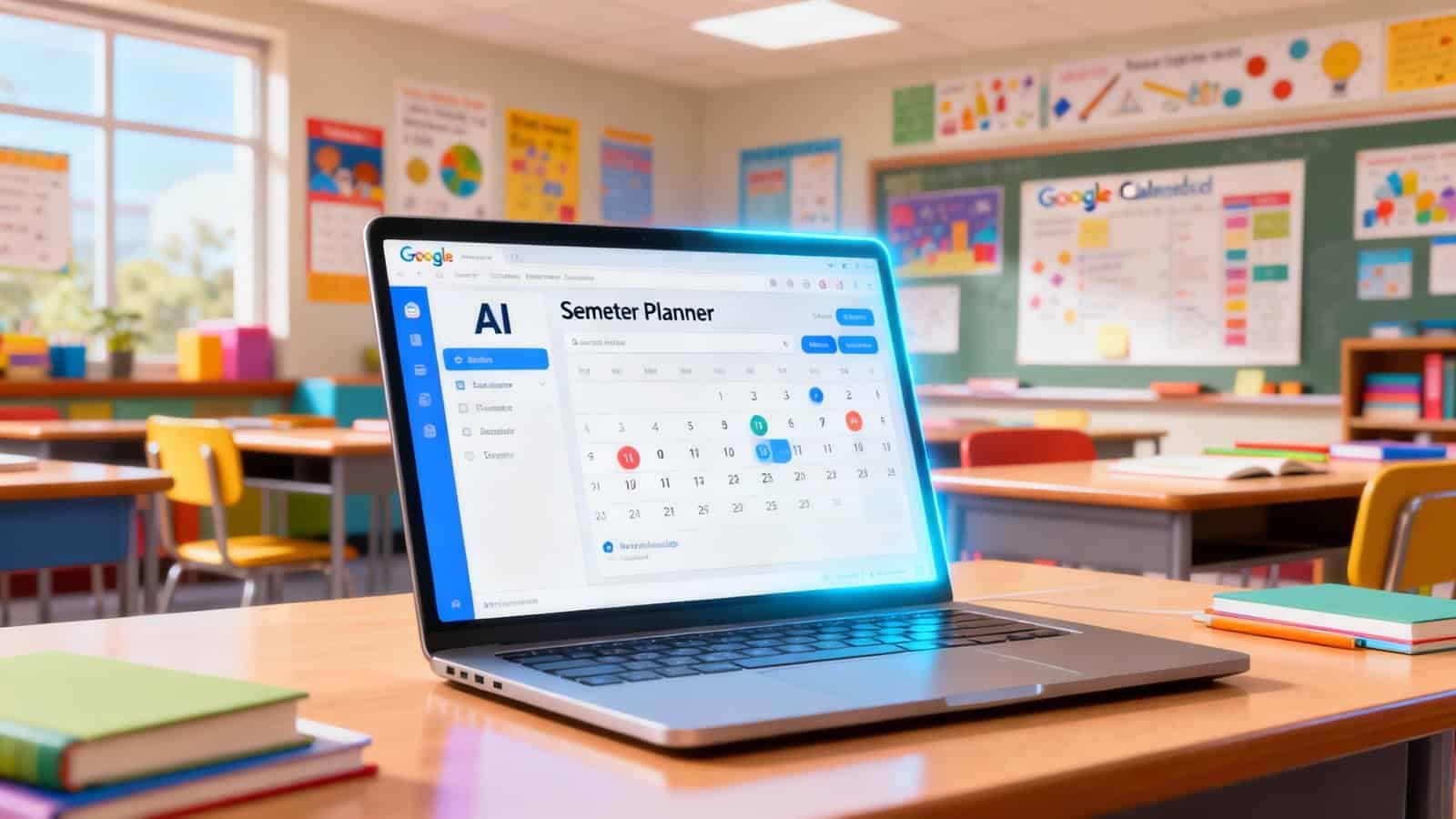
AI Semester Planner That Integrates With Google Calendar
You’ll find several AI-powered semester planners that seamlessly integrate with Google Calendar, including Motion ($19-34/month), Reclaim.ai (free-$18/month), and Notion AI ($8-16/month). These tools analyze your study patterns, automatically schedule tasks around your existing commitments, and provide real-time conflict detection with bidirectional sync across all devices. They optimize your workload distribution while accommodating personal learning rhythms and preventing academic burnout through intelligent time allocation. Understanding their specific features helps you choose the right implementation strategy.
Key Takeaways
- AI semester planners sync bidirectionally with Google Calendar, providing instant updates across all devices and real-time conflict detection.
- Machine learning analyzes study patterns, deadlines, and productivity rhythms to create dynamic, personalized schedules that adapt continuously.
- Smart planners automatically populate study blocks, assignment deadlines, and exam dates while optimizing time allocation based on performance data.
- Top tools include Motion ($19-34/month), Notion AI ($8-16/month), and Reclaim.ai (free-$18/month) with robust Google Calendar integration features.
- AI learns from anchor points like class times and deadlines to make increasingly accurate scheduling recommendations and prevent burnout.
How AI-Powered Semester Planning Transforms Academic Time Management

While traditional semester planning relies on static calendars and manual tracking, AI-powered systems revolutionize academic time management by continuously analyzing your study patterns, assignment deadlines, and personal productivity rhythms.
AI transforms rigid semester schedules into dynamic, personalized systems that adapt to your unique learning patterns and productivity cycles.
You’ll discover how intelligent algorithms automatically adjust your schedule based on real-time performance data, ensuring ideal learning outcomes.
This transformation prioritizes your mental wellbeing by preventing overwhelming workloads through predictive stress analysis.
The AI identifies when you’re approaching burnout and redistributes tasks accordingly.
You’re no longer confined to rigid scheduling that ignores your natural energy fluctuations.
Study equity becomes achievable as AI accommodates diverse learning styles and accessibility needs.
Whether you’re a visual learner requiring extended reading time or someone managing multiple responsibilities, the system adapts to your unique circumstances.
Implementation involves connecting your academic requirements with personalized algorithms that learn from your behavior.
You’ll experience seamless integration between course demands and personal capacity, creating sustainable academic success through data-driven time allocation.


Key Features That Set Smart Planners Apart From Traditional Scheduling Tools
You’ll discover that intelligent schedule optimization eliminates the guesswork from academic planning by automatically analyzing your course requirements, assignment deadlines, and personal commitments to create ideal study blocks.
Smart planners continuously adapt your schedule based on your actual performance patterns and changing priorities, unlike static traditional calendars that require constant manual updates.
Real-time calendar sync guarantees you’re always working with current information across all your devices, preventing the scheduling conflicts and missed deadlines that plague conventional planning methods.
Intelligent Schedule Optimization
When traditional scheduling tools rely on static templates and manual adjustments, AI-powered semester planners leverage machine learning algorithms to continuously analyze your academic patterns, workload distribution, and performance metrics.
These systems identify your peak productivity hours and implement circadian alignment to schedule demanding coursework when you’re naturally most alert. Through focus clustering, the AI groups similar tasks together, minimizing cognitive switching costs and maximizing deep work sessions.
The optimization engine dynamically adjusts your schedule based on real-time performance data, automatically redistributing assignments when you’re falling behind or accelerating timelines when you’re ahead.
You’ll receive personalized recommendations for study breaks, buffer time allocation, and deadline prioritization. This intelligent adaptation guarantees your schedule evolves with your changing academic demands throughout the semester.
Real-Time Calendar Sync
How does seamless calendar integration transform your academic planning workflow?
Real-time synchronization eliminates the friction between your AI planner and Google Calendar, creating a unified scheduling ecosystem.
When you add assignments or study sessions, they’re instantly reflected across all devices, making sure you’re never working with outdated information.

The two-way sync capability means changes made in either platform automatically update the other.
You’ll receive immediate notifications when conflicts arise, allowing for quick resolution before scheduling issues compound.
However, consider potential limitations: API limits may temporarily restrict sync frequency during peak usage periods, and offline access capabilities vary between platforms.
Research your chosen planner’s sync architecture and backup protocols to guarantee consistent performance.
This technical understanding helps you maximize the integration’s reliability for critical academic deadlines.
Google Calendar Integration: Seamless Workflow Across Your Digital Ecosystem
| Integration Feature | Student Benefit |
|---|---|
| Bidirectional Sync | Updates reflect instantly across all devices |
| Assignment Deadlines | Automatic calendar entries with smart reminders |
| Class Schedules | Real-time conflict detection and resolution |
| Study Blocks | AI-optimized time allocation based on workload |
Your workflow becomes effortless when exam schedules automatically populate Google Calendar while study sessions adjust based on your availability. You’ll control which data shares between platforms through granular permission settings, ensuring privacy while maximizing productivity.
The integration eliminates manual entry duplication, reduces scheduling conflicts, and creates a holistic academic timeline. Your smartphone notifications, desktop alerts, and wearable reminders work harmoniously, keeping you accountable to your semester goals without overwhelming your digital ecosystem.
Intelligent Schedule Optimization Based on Personal Learning Patterns

Beyond synchronizing your digital ecosystem, your AI semester planner analyzes your unique learning behaviors to create personalized study schedules that maximize retention and minimize cognitive fatigue.
The system tracks when you’re most productive, which subjects require deeper focus periods, and how you respond to different study intervals.
You’ll receive optimized schedules that account for your peak concentration hours, preferred break patterns, and material difficulty levels.
The AI identifies patterns like morning alertness for mathematics or evening effectiveness for creative writing, then automatically adjusts your calendar accordingly.
However, consider the privacy tradeoffs involved in detailed behavioral tracking.
Your learning data becomes valuable intelligence that requires careful protection.
Additionally, equity implications emerge when optimization depends on access to consistent study environments and technology resources.
The planner continuously refines its recommendations based on your performance feedback, quiz results, and completion rates, ensuring your schedule evolves with your academic progress and changing needs.
Top AI Semester Planning Tools Worth Considering for Students
Which AI-powered tools actually deliver on the promise of intelligent semester planning? You’ll find these standout options integrate seamlessly with your existing workflow while addressing critical privacy concerns.
| Tool | Pricing Models | Key Features |
|---|---|---|
| Notion AI | $8-16/month | Smart templates, automated scheduling |
| Motion | $19-34/month | Calendar blocking, task prioritization |
| Reclaim.ai | Free-$18/month | Habit scheduling, focus time protection |
| TimeTree | Free-$5/month | Shared calendars, deadline tracking |
When evaluating these platforms, you’ll want to examine their data handling practices carefully. Motion and Reclaim.ai offer robust encryption, while Notion stores data on US servers. TimeTree provides transparent privacy policies with minimal data collection.
Consider starting with free tiers to test functionality before committing to paid plans. You’ll discover that combining multiple tools often yields better results than relying on a single solution for holistic semester management.
Setting Up Your Smart Academic Calendar for Maximum Productivity
Once you’ve selected your preferred AI planning tools, configuring your academic calendar becomes the foundation for semester-long productivity gains.
Start by establishing consistent study rituals that your AI can recognize and automatically schedule. Input your class times, assignment deadlines, and exam dates as anchor points that’ll guide automated scheduling decisions.
Transform your scattered academic obligations into predictable patterns that AI can learn, optimize, and automatically weave into your daily schedule.
Configure smart notification etiquette by setting different alert types for various activities.
You’ll want immediate notifications for class changes, 24-hour reminders for major assignments, and weekly previews for upcoming deadlines. This prevents notification fatigue while maintaining awareness.
Create calendar layers separating academics, personal commitments, and buffer time.
Your AI planner will use these boundaries to optimize scheduling without overwhelming your capacity. Enable cross-platform synchronization so updates reflect instantly across devices.
Set realistic time blocks for different task types—lectures need travel time, study sessions require focus periods, and group projects demand coordination windows.
This data trains your AI to make increasingly accurate scheduling recommendations.
Frequently Asked Questions
You’ll face significant offline limitations since the planner requires internet connectivity for Google Calendar integration.
While you can implement local caching to store previously synced data, you won’t access real-time updates or sync new changes without connection.
You’ll view cached semester plans and assignments, but can’t create events or modify schedules until you’re back online and the system reconnects.
Can Parents or Advisors Access and View My AI Semester Planner?
You can configure sharing permissions to grant parents or advisors role-based access to your semester planner.
Implementation depends on your specific platform’s privacy controls and Google Calendar’s sharing settings.
You’ll control what information they view through granular permission levels – from read-only schedule visibility to full planning access.
Research your institution’s privacy policies and configure role-based access that balances transparency with personal autonomy over your academic planning.
What Happens to My Data if I Stop Using the Service?
When you stop using the service, you’ll typically have data portability options to export your semester plans, assignments, and scheduling data before account deletion.
Most platforms provide a grace period where you can download your information in standard formats.
After account deletion, your personal data should be permanently removed from their servers, though some anonymized usage statistics might be retained for service improvement purposes.
Are There Costs Associated With Premium AI Planning Features?
Yes, premium AI planning features typically require paid subscription tiers with monthly or annual billing options.
You’ll find basic scheduling and calendar integration in free versions, but advanced capabilities like intelligent course load balancing, deadline optimization, and personalized study recommendations are premium-only.
Compare feature comparison charts across providers to evaluate which subscription tier delivers the AI functionality you need for effective semester management.
How Does the AI Handle Schedule Conflicts With Part-Time Jobs?
You’ll benefit from AI systems that automatically detect work-schedule overlaps and implement shift prioritization algorithms.
The AI performs conflict negotiation by analyzing your job requirements against academic deadlines, then suggests most suitable rescheduling options.
You can set priority levels for different commitments, enabling the system to recommend whether you should request shift changes, adjust study sessions, or negotiate deadline extensions with professors based on your specific constraints.
Conclusion
You’ve explored how AI-powered semester planners revolutionize academic scheduling through intelligent automation and Google Calendar integration. Now it’s time to implement these tools in your workflow. Start by selecting a planner that matches your learning patterns, then configure Google Calendar sync for seamless access across devices. You’ll discover that smart scheduling adapts to your habits, optimizes study blocks, and transforms chaotic academic demands into manageable, productive routines.
Table of Contents
- 1 Key Takeaways
- 2 How AI-Powered Semester Planning Transforms Academic Time Management
- 3 Key Features That Set Smart Planners Apart From Traditional Scheduling Tools
- 4 Google Calendar Integration: Seamless Workflow Across Your Digital Ecosystem
- 5 Intelligent Schedule Optimization Based on Personal Learning Patterns
- 6 Top AI Semester Planning Tools Worth Considering for Students
- 7 Setting Up Your Smart Academic Calendar for Maximum Productivity
- 8 Frequently Asked Questions
- 8.1 Does the AI Planner Work Offline When Internet Connection Is Unavailable?
- 8.2 Can Parents or Advisors Access and View My AI Semester Planner?
- 8.3 What Happens to My Data if I Stop Using the Service?
- 8.4 Are There Costs Associated With Premium AI Planning Features?
- 8.5 How Does the AI Handle Schedule Conflicts With Part-Time Jobs?
- 9 Conclusion








No Comments