
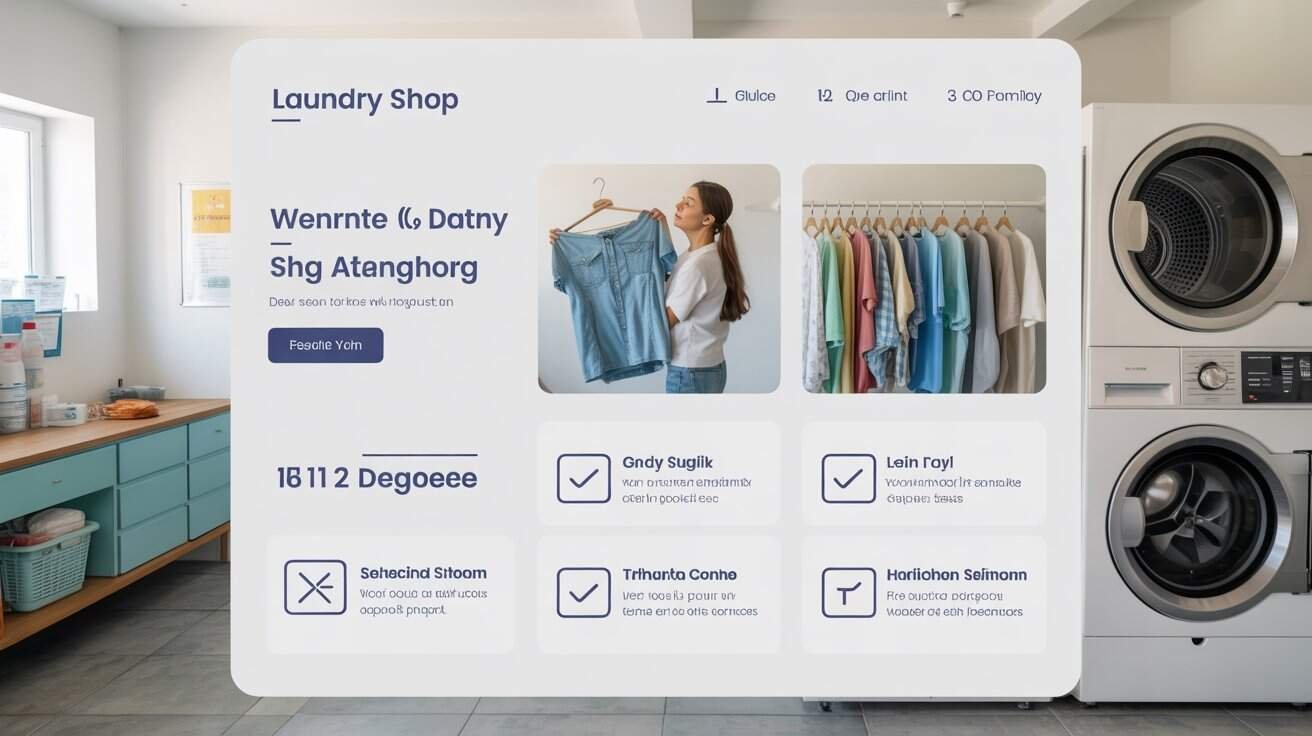
Your laundry shop’s website checklist should prioritize an intuitive online booking system, mobile optimization, and transparent pricing displays to convert visitors into customers. Include essential pages covering service descriptions, pickup/delivery policies, and service area boundaries with ZIP code verification. Implement SSL certificates, customer testimonials, and multiple contact channels to build trust. Optimize for local SEO using location-based keywords and install analytics to track conversion rates. Master these fundamentals to transform your digital presence into a revenue-generating powerhouse.
Key Takeaways
- Include an online booking system with service selection, pricing display, and available time slot scheduling for customer convenience.
- Ensure mobile optimization and fast loading speeds across all devices to maximize conversion rates and user experience.
- Display customer testimonials, security badges, and SSL certificates prominently to build trust and credibility with potential clients.
- Create essential pages covering service descriptions, pickup/delivery policies, payment options, and frequently asked questions to address customer concerns.
- Implement local SEO with consistent NAP information and analytics tracking to monitor performance and improve search visibility.
Why Your Laundry Shop Needs a Website
While customers increasingly expect digital convenience across all service industries, laundry shop owners often underestimate their website’s impact on business growth. Your website serves as your digital storefront, operating 24/7 to capture leads and convert visitors into paying customers.
Your website operates as a 24/7 digital storefront, capturing leads and converting visitors into paying customers while you sleep.
A strategically designed laundry shop website can differentiate your business from competitors and streamline operations while boosting revenue.
Your website’s primary function should facilitate seamless customer interactions through online booking capabilities. Customers want to schedule pickups and deliveries without phone calls or in-person visits.
Implement a user-friendly booking system that displays available time slots, allows service selection, and captures essential customer information. This automation reduces administrative workload while providing customers the convenience they demand.
Additionally, transparent pricing display builds trust and eliminates customer hesitation. List all services with clear pricing structures, including any additional fees for special treatments or rush orders.
Mobile optimization isn’t optional—it’s essential. Over 60% of users access websites through mobile devices, and a non-responsive design creates immediate friction.
Test your website across various devices and screen sizes to assure consistent functionality. Fast loading speeds directly impact conversion rates, with even one-second delays reducing customer satisfaction markedly.
Your service area coverage deserves prominent placement on every page. Clearly define geographical boundaries, delivery zones, and any location-specific pricing variations.
Include an interactive map or ZIP code checker to help potential customers quickly determine service availability. This transparency prevents wasted inquiries and improves customer experience.


Contact information should appear consistently across all pages, including phone numbers, email addresses, and physical location details. Integrate multiple communication channels—live chat, contact forms, and social media links—to accommodate different customer preferences.
Quick response capabilities demonstrate professionalism and reliability.
Customer testimonials and reviews provide social proof that influences purchasing decisions. Display authentic feedback prominently, focusing on reliability, quality, and convenience factors that matter most to laundry service customers.
Include photos when possible to enhance credibility.
Essential pages include detailed service descriptions, pickup and delivery policies, payment options, and frequently asked questions. Address common concerns about garment care, turnaround times, and handling procedures.
Clear policies reduce customer uncertainty and minimize support inquiries.
Search engine optimization assures local customers can find your business online. Incorporate location-based keywords, maintain consistent NAP (name, address, phone) information across platforms, and optimize for local search terms like “laundry service near me.”
Security features protect customer data and build confidence in your digital platform. Install SSL certificates, secure payment processing, and clear privacy policies. Display security badges and certifications prominently.
Analytics implementation enables data-driven improvements. Track conversion rates, popular services, customer acquisition sources, and user behavior patterns.
This information guides marketing strategies and website optimizations that directly impact business growth. Regular monitoring and updates ensure your website continues serving as an effective business tool rather than a static online brochure.

Frequently Asked Questions
How Much Does It Cost to Build a Website for a Laundry Shop?
You’ll spend $500-5,000 building a laundry shop website, depending on your chosen approach. DIY platforms cost $100-500, while custom development reaches $3,000-5,000.
Consider pricing tiers: basic templates for simple needs, premium themes for enhanced features, or full custom builds for unique requirements. Factor in ongoing maintenance costs of $50-200 monthly for hosting, updates, and security.
Analyze your customer acquisition goals and budget accordingly to maximize ROI.
What Payment Methods Should I Integrate on My Laundry Shop Website?
You’ll want to integrate credit cards (Visa, Mastercard, American Express) as your primary payment method since most customers expect this standard option.
Add mobile wallets like Apple Pay, Google Pay, and Samsung Pay to capture tech-savvy users who prefer contactless payments.
Consider PayPal for online trust and convenience.
These three payment categories will cover 95% of your customer preferences and maximize conversion rates.
Do I Need Online Booking Functionality for My Laundry Business Website?
You’ll greatly benefit from online booking functionality since it streamlines customer scheduling and reduces phone calls.
Online booking? It’s essential for modern laundry businesses competing with app-based services. Consider mobile app integration to capture customers who prefer smartphone convenience.
This feature increases operational efficiency by automatically organizing pickup/delivery schedules while providing customers 24/7 access to book services, ultimately boosting revenue and customer satisfaction.
How Often Should I Update Content on My Laundry Shop Website?
You should implement weekly updates for basic content like hours, services, and pricing while launching seasonal promotions quarterly to drive customer engagement.
Focus your analytical approach on updating high-impact pages monthly—your homepage, services, and contact information.
Track which content updates generate the most traffic and conversions, then prioritize those areas.
Consistent, strategic updates improve SEO rankings and keep customers informed about your laundry business.
Should My Laundry Website Include Customer Reviews and Testimonials Section?
Yes, you should include customer reviews and testimonials. They boost review credibility by providing social proof that influences potential customers’ decisions.
Focus on strategic testimonial placement—position them prominently on your homepage, service pages, and near call-to-action buttons. Display recent reviews with customer names and photos when possible.
This builds trust, differentiates your laundry shop from competitors, and directly impacts conversion rates through authentic customer experiences.
Conclusion
You’ve got the blueprint—now execute. Your laundry shop’s digital presence isn’t optional anymore; it’s competitive necessity. Start with mobile optimization since 70% of local searches happen on phones. Implement online booking to reduce wait times and increase efficiency. Don’t overcomplicate—focus on core features that drive revenue: scheduling, pricing transparency, and customer communication. Launch lean, measure performance, and iterate based on actual customer behavior. Your website should work as hard as your machines.
Table of Contents
- 1 Key Takeaways
- 2 Why Your Laundry Shop Needs a Website
- 3 Frequently Asked Questions
- 3.1 How Much Does It Cost to Build a Website for a Laundry Shop?
- 3.2 What Payment Methods Should I Integrate on My Laundry Shop Website?
- 3.3 Do I Need Online Booking Functionality for My Laundry Business Website?
- 3.4 How Often Should I Update Content on My Laundry Shop Website?
- 3.5 Should My Laundry Website Include Customer Reviews and Testimonials Section?
- 4 Conclusion








No Comments