
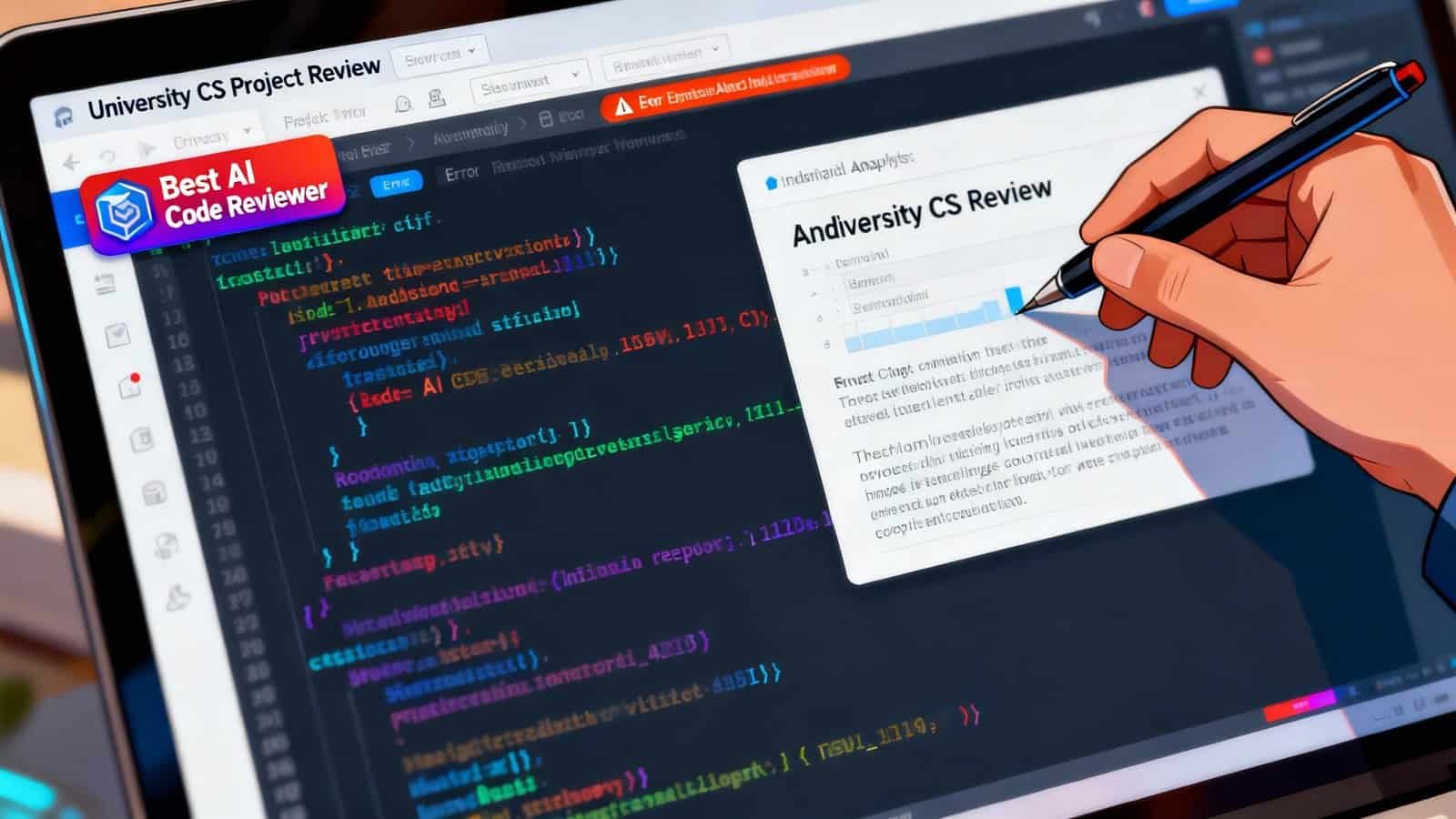
You’ll find that leading AI code reviewers for university CS courses include platforms like Codio, Gradescope, and CodeGrade, which offer pedagogically-focused feedback beyond syntax checking. These systems analyze code structure, detect logic errors, identify algorithmic inefficiencies, and integrate seamlessly with learning management systems like Canvas. They provide real-time feedback, customizable rubrics, and plagiarism detection while supporting multiple programming languages. The most effective solutions balance automated assessment with instructor oversight, enabling you to scale grading while maintaining educational quality—and there’s much more to weigh when selecting the ideal platform.
Key Takeaways
- AI code reviewers provide automated feedback on structure, logic errors, and algorithmic efficiency beyond basic syntax checking.
- Integration with learning management systems enables real-time feedback and customizable rubrics for diverse programming assignments.
- Pedagogically sound explanations guide students toward better coding practices while reinforcing lecture concepts and programming principles.
- Scalable solutions handle hundreds of weekly submissions with consistent feedback, addressing grading bottlenecks in large CS courses.
- Educational pricing models and time savings justify investment while supporting hybrid approaches with instructor oversight.
Transforming CS Education Through Automated Code Assessment

As computer science enrollments surge across universities, instructors face an unprecedented challenge in providing timely, consistent feedback on student code submissions. You’re likely managing hundreds of assignments weekly, making thorough code review nearly impossible through traditional manual methods. AI-powered code reviewers now offer sophisticated solutions that can transform how you evaluate student programming work while maintaining educational quality.
Modern AI code reviewers excel at delivering automated feedback that goes beyond simple syntax checking. These systems analyze code structure, identify logic errors, evaluate algorithmic efficiency, and provide detailed explanations that help students understand their mistakes. You’ll find that automated feedback systems can instantly highlight issues like memory leaks, inefficient loops, or improper variable naming conventions. Advanced plagiarism detection capabilities scan submissions against vast databases of existing code, academic repositories, and previous student work, safeguarding academic integrity while catching sophisticated attempts at code copying or collaboration violations.
When selecting an AI code reviewer for your courses, you’ll want to prioritize platforms that support multiple programming languages commonly used in computer science curricula. Look for systems that integrate seamlessly with learning management systems like Canvas, Blackboard, or Moodle, enabling streamlined workflow management. The most effective tools offer customizable rubrics that align with your specific assignment requirements and learning objectives.
You should evaluate platforms based on their ability to provide pedagogically sound feedback rather than merely identifying errors. Quality AI reviewers offer explanatory comments that guide students toward better coding practices, suggest alternative approaches, and reinforce programming principles you’ve covered in lectures. These systems can detect common beginner mistakes like hardcoding values, missing edge case handling, or poor exception management while providing constructive guidance for improvement.
Implementation considerations include guaranteeing the AI reviewer can handle varying assignment complexities, from basic syntax exercises to complex data structure implementations. You’ll benefit from platforms that offer real-time feedback during development, allowing students to iterate and improve their code before final submission. Some advanced systems provide code quality metrics, helping you track student progress over time and identify areas where additional instruction might be needed.
Cost-effectiveness becomes essential when scaling across entire computer science departments. Many platforms offer educational pricing models that make enterprise-level code analysis accessible to academic institutions. You’ll find that the time savings in grading and feedback generation often justify the investment, particularly when managing large enrollment courses.
The most successful AI code reviewers balance automation with human oversight, allowing you to review flagged submissions and add personalized comments where needed. This hybrid approach guarantees that complex conceptual issues receive appropriate attention while routine feedback gets handled efficiently. By implementing these tools strategically, you can maintain high educational standards while managing increased enrollment demands, ultimately improving both student learning outcomes and your teaching effectiveness.
Frequently Asked Questions
How Much Does AI Code Review Software Typically Cost for Universities?
You’ll find AI code review software costs vary considerably based on pricing models, typically ranging from $5-50 per student annually.
Most vendors offer substantial volume discounts for institutional licenses, often reducing per-seat costs by 30-60% for universities with 100+ students.


Enterprise educational packages frequently include unlimited faculty accounts, integration support, and custom deployment options that affect total implementation costs.
Can AI Reviewers Detect Plagiarism Between Student Code Submissions?
You’ll find AI reviewers can detect plagiarism through semantic similarity analysis, identifying functionally identical code despite surface-level changes.
They’re particularly effective at obfuscation detection, catching attempts to disguise copied work through variable renaming, comment modifications, or structural reordering.
However, you shouldn’t rely solely on AI detection—it’s best combined with traditional plagiarism tools and manual review for thorough academic integrity enforcement.
Which Programming Languages Are Supported by Most AI Code Reviewers?
Most AI code reviewers provide extensive Language Coverage for popular programming languages including Python, Java, JavaScript, C++, C#, and Go.
You’ll find robust Framework Support for web frameworks like React and Django, as well as mobile development platforms.
However, you should verify specific language support before implementation, as coverage varies substantially between platforms.
Less common academic languages like Haskell or Prolog often receive limited support in current AI reviewing systems.
How Do Students Access Feedback From AI Code Review Tools?
You’ll access feedback through Dashboard Integration that displays detailed analysis results, syntax errors, and improvement suggestions in real-time.
Most platforms offer multiple Notification Channels including email alerts, in-app notifications, and mobile push messages when reviews complete.

You can view detailed reports with line-by-line comments, performance metrics, and learning recommendations.
Some tools integrate directly with your IDE or learning management system for seamless workflow.
What Happens to Student Code Data After AI Review Processing?
Your code data undergoes data anonymization processes that strip personal identifiers before storage or analysis.
You’ll find that retention policies vary substantially across platforms—some delete submissions immediately after feedback generation, while others retain anonymized code for model improvement.
You should review each tool’s specific data handling practices, as academic institutions often negotiate custom retention policies that align with educational privacy requirements and student data protection standards.
Conclusion
You’ll find that implementing AI code reviewers in your CS courses fundamentally transforms student learning outcomes through consistent, immediate feedback mechanisms. These tools enhance your pedagogical effectiveness by providing scalable assessment solutions that maintain academic rigor while reducing grading overhead. You’re empowering students with real-time code quality insights, fostering independent debugging skills, and establishing standardized evaluation criteria. The integration accelerates learning cycles, improves code comprehension, and prepares students for industry-standard development practices they’ll encounter in professional environments.
Table of Contents
- 1 Key Takeaways
- 2 Transforming CS Education Through Automated Code Assessment
- 3 Frequently Asked Questions
- 3.1 How Much Does AI Code Review Software Typically Cost for Universities?
- 3.2 Can AI Reviewers Detect Plagiarism Between Student Code Submissions?
- 3.3 Which Programming Languages Are Supported by Most AI Code Reviewers?
- 3.4 How Do Students Access Feedback From AI Code Review Tools?
- 3.5 What Happens to Student Code Data After AI Review Processing?
- 4 Conclusion








No Comments