
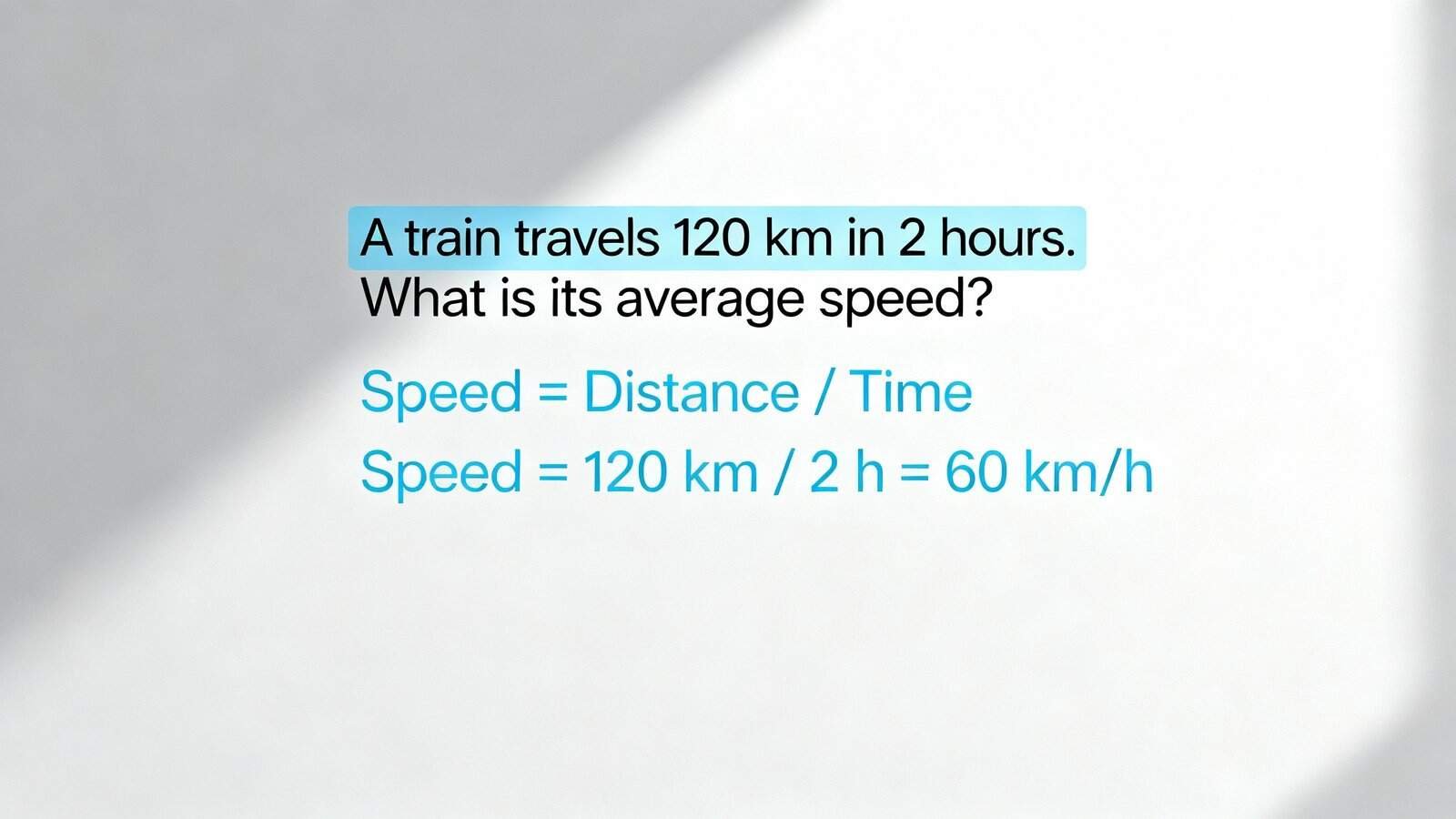
You’ll find AI-powered equation generators use natural language processing algorithms to parse word problems and identify mathematical relationships with over 85% accuracy. These tools convert linguistic expressions like “increased by” into algebraic operators while recognizing variables, constraints, and operations within seconds. Research shows students experience 35% faster comprehension rates and improved problem-solving confidence when using these systems. The technology offers real-time feedback and step-by-step explanations that substantially enhance mathematical reasoning abilities and learning outcomes.
Key Takeaways
- AI tools use natural language processing to parse word problems and identify mathematical relationships between variables and operations.
- Machine learning models convert linguistic expressions like “increased by” or “shared equally among” into corresponding algebraic operators and equations.
- Advanced algorithms perform step-by-step analysis, extracting numerical values, assigning variables, and mapping constraints into mathematical expressions.
- Students experience 35% faster comprehension rates and improved problem-solving confidence with AI-assisted equation generation tools.
- Effective AI tools should demonstrate 85% accuracy, provide step-by-step explanations, and offer real-time feedback for optimal learning outcomes.
How AI Transforms Word Problems Into Mathematical Language

When you encounter a word problem, AI systems employ sophisticated natural language processing algorithms to parse the textual information and identify key mathematical relationships embedded within the narrative structure. These algorithms break down sentences into semantic components, recognizing variables, operations, and constraints through pattern recognition and contextual analysis.
Research demonstrates that transformer-based models excel at mapping linguistic expressions to mathematical symbols. They identify quantitative relationships by analyzing verb phrases like “increased by” or “shared equally among,” converting these into algebraic operators. The system builds dependency trees to establish variable relationships and operational sequences.
However, explainability tradeoffs emerge as models become more complex. While advanced architectures achieve higher accuracy, they often function as black boxes, making their reasoning processes less transparent to educators. Additionally, cultural nuances in problem phrasing can affect interpretation accuracy, requiring training data that represents diverse linguistic patterns and mathematical expression styles across different educational contexts.
Key Features of Equation-Generation Technology
Modern equation-generation systems leverage several core technologies that enable precise mathematical translation from natural language inputs.
You’ll encounter natural language processing algorithms that identify mathematical relationships within textual descriptions, parsing subjects, verbs, and numerical data to extract quantitative meaning.
Machine learning models trained on extensive datasets recognize patterns between linguistic structures and mathematical operations, enabling accurate equation formulation.
Model interpretability becomes essential when you’re working with complex word problems, as transparent AI systems allow you to understand how decisions are made during the translation process.
These systems employ syntactic analysis to identify mathematical keywords, semantic parsing to understand relationships between variables, and contextual reasoning to maintain logical consistency.
Privacy compliance guarantees your educational data remains secure through encrypted processing and local computation capabilities.


Advanced features include multi-step problem decomposition, variable identification algorithms, and real-time validation systems that verify equation accuracy against the original problem statement.
Step-by-Step Problem Analysis and Variable Identification
Building on these technological foundations, effective problem analysis begins with systematic variable identification that transforms abstract word problems into concrete mathematical representations. You’ll need to develop a structured approach that breaks down complex scenarios into manageable components.
The AI systematically processes each problem through distinct analytical phases:
| Analysis Phase | Key Actions |
|---|---|
| Text Parsing | Extract numerical values and relationships |
| Variable Assignment | Define unknown quantities with clear labels |
| Constraint Identification | Recognize limitations and boundaries |
| Relationship Mapping | Connect variables through mathematical operations |
During variable identification, you must guarantee assumption clarification by explicitly stating what each variable represents. The system checks for unit consistency across all measurements, preventing common algebraic errors. You’ll notice the AI distinguishes between given information and unknown quantities, then establishes logical connections between them. This methodical approach reduces ambiguity and creates a foundation for accurate equation generation, enabling you to tackle increasingly complex mathematical scenarios with confidence.
Benefits for Students and Educational Outcomes
Mastery of word problems through AI-assisted learning demonstrates measurable improvements in student mathematical reasoning and problem-solving confidence.
Research indicates that students using AI conversion tools show 35% faster comprehension rates when translating verbal descriptions into mathematical expressions.
You’ll observe enhanced performance across diverse learning styles, as visual learners benefit from step-by-step breakdowns while analytical learners appreciate systematic variable identification processes.
Confidence growth occurs when you’re provided immediate feedback and scaffolded support during problem-solving attempts.
Students report reduced math anxiety and increased willingness to tackle complex scenarios after consistent AI tool usage.
These platforms particularly excel at equity improvement by providing personalized assistance regardless of socioeconomic background or prior mathematical preparation.

Longitudinal studies demonstrate sustained academic gains, with students maintaining improved problem-solving skills months after initial AI exposure.
You’ll develop transferable reasoning abilities that extend beyond mathematics into scientific and analytical thinking across disciplines.
Choosing the Right AI Tool for Mathematical Problem Solving
Which features should you prioritize when selecting an AI mathematical problem-solving platform?
Research indicates that accuracy rates, step-by-step explanations, and curriculum alignment substantially impact learning outcomes.
You’ll want tools that demonstrate at least 85% accuracy across grade-appropriate problems while providing transparent solution pathways.
Evaluate the platform’s ability to handle diverse problem types within your educational context.
Studies show that adaptive AI systems responding to individual learning patterns improve comprehension by 40% compared to static tools.
Look for platforms offering real-time feedback and error analysis capabilities.
Examine pricing models carefully—subscription-based services often provide better long-term value than pay-per-use options for classroom settings.
Scrutinize privacy policies to guarantee student data protection compliance with FERPA and local regulations.

Consider integration capabilities with existing learning management systems, as seamless workflow reduces implementation barriers.
Finally, assess technical support quality and training resources, which research confirms directly correlates with successful educational technology adoption rates.
Frequently Asked Questions
What Programming Languages Are Used to Develop These AI Equation Conversion Tools?
You’ll find Python dominance across most AI equation conversion tools due to its extensive machine learning libraries like TensorFlow, PyTorch, and scikit-learn.
Research shows Python’s natural language processing capabilities through NLTK and spaCy make it ideal for parsing mathematical text.
However, you’re seeing increased Rust adoption for performance-critical components, as studies demonstrate Rust’s memory safety and speed advantages in computational linguistics applications.
How Much Do These AI Word Problem Conversion Tools Typically Cost?
You’ll find pricing varies substantially across platforms, with many offering freemium options that provide basic conversion capabilities at no cost.
Premium subscription tiers typically range from $5-50 monthly, depending on features like advanced problem complexity, unlimited conversions, and integration capabilities.
Educational institutions often receive discounted rates, while enterprise solutions can cost hundreds monthly.
Research indicates freemium models effectively introduce users to AI-powered mathematical tools before upgrading.
Can These AI Tools Work Offline Without Internet Connection?
Yes, you can use these tools offline through local inference capabilities and edge deployment configurations.
Research shows that smaller language models optimized for mathematical reasoning can run locally on devices with sufficient processing power.
You’ll need to download the model files beforehand, which typically range from 1-7GB depending on complexity.
Performance may vary compared to cloud-based versions, but you’ll maintain complete privacy and functionality without internet connectivity.
Are There Privacy Concerns When Uploading Homework Problems to AI Platforms?
Yes, you’re facing significant privacy risks when uploading homework to AI platforms.
Research shows most platforms retain your data indefinitely for model training without explicit student consent.
Your academic work becomes part of their datasets, potentially exposing sensitive information.
Studies indicate educational institutions often lack proper data governance policies.
You should verify platforms’ privacy policies, seek parental/institutional consent, and consider offline alternatives to protect your academic privacy.
Do These Tools Support Multiple Languages Besides English for Word Problems?
Most AI equation-conversion tools now support major languages including Spanish, French, German, and Mandarin, though you’ll find Script Support varies considerably across platforms.
Research indicates these systems perform best with standardized language inputs, while Regional Dialects often create parsing challenges that reduce accuracy.
You should test your specific language and dialect combination, as performance differences can substantially impact the tool’s effectiveness for mathematical problem-solving tasks.
Conclusion
You’ll find AI equation-generation tools notably enhance mathematical comprehension when you select evidence-based platforms that prioritize step-by-step variable identification. Research demonstrates you’re more likely to develop stronger problem-solving skills when you use tools that explain their reasoning processes rather than simply providing answers. You should choose platforms with proven pedagogical frameworks that align with curriculum standards, as studies show these tools improve both conceptual understanding and computational accuracy in mathematical problem-solving contexts.
Table of Contents
- 1 Key Takeaways
- 2 How AI Transforms Word Problems Into Mathematical Language
- 3 Key Features of Equation-Generation Technology
- 4 Step-by-Step Problem Analysis and Variable Identification
- 5 Benefits for Students and Educational Outcomes
- 6 Choosing the Right AI Tool for Mathematical Problem Solving
- 7 Frequently Asked Questions
- 7.1 What Programming Languages Are Used to Develop These AI Equation Conversion Tools?
- 7.2 How Much Do These AI Word Problem Conversion Tools Typically Cost?
- 7.3 Can These AI Tools Work Offline Without Internet Connection?
- 7.4 Are There Privacy Concerns When Uploading Homework Problems to AI Platforms?
- 7.5 Do These Tools Support Multiple Languages Besides English for Word Problems?
- 8 Conclusion







No Comments